

Vintage Design
Painted on a Bomber: The True Story of World War II Nose Art
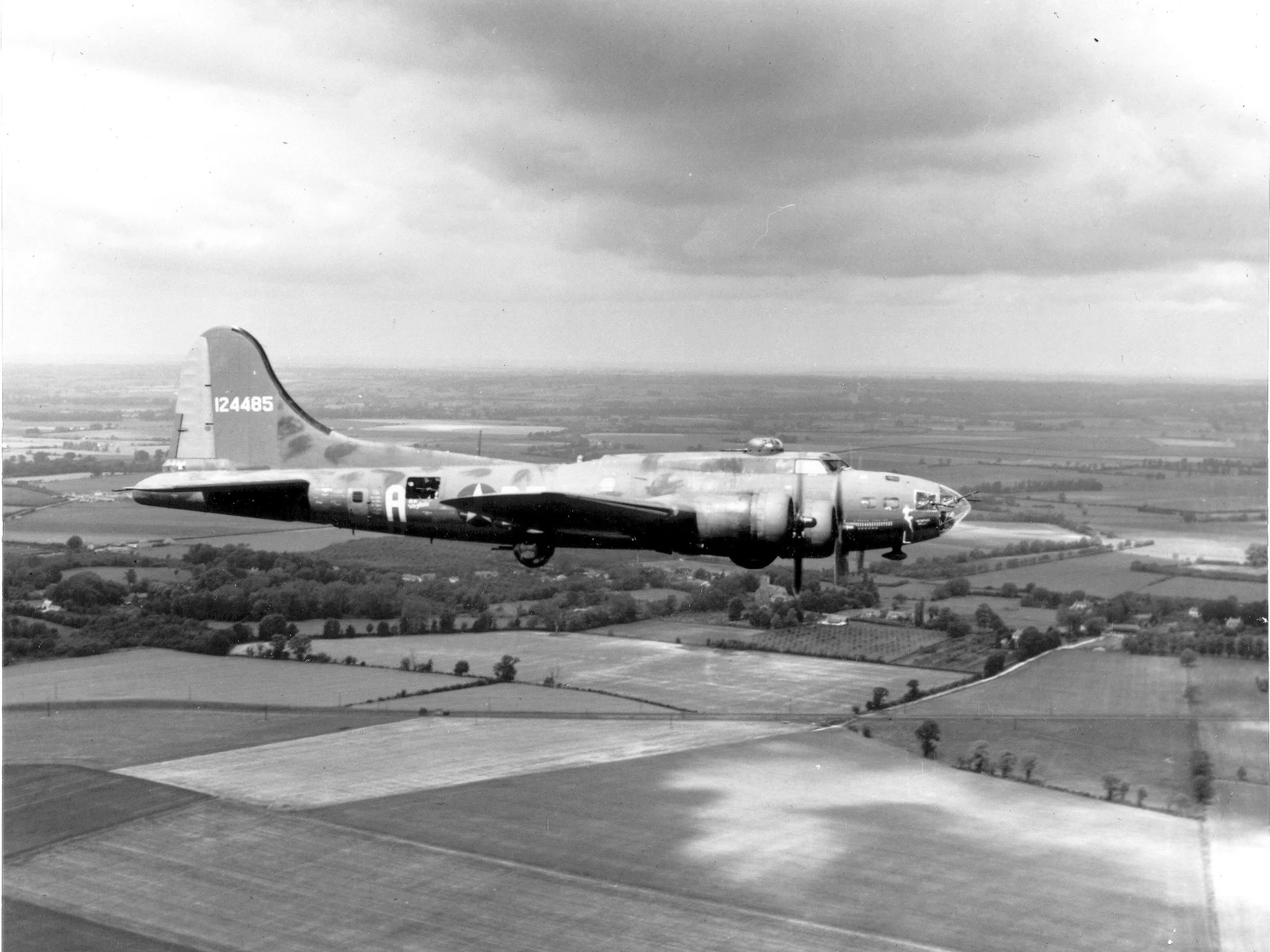
Every bomber had a name, and most had a girl.
In the Second World War, American aircrews painted their aircraft — names, mascots, cartoon characters and, most famously, pin-up girls, right on the nose of the plane, beside the cockpit, where everyone could see them. It was called nose art, and it was never official. Nobody ordered it. Nobody quite approved it, either. Commanders mostly looked the other way, because they understood what the paintings were for.
A bomber was a machine built by the thousands, identical to every other machine on the field. The painting made it theirs. It carried the name of a girlfriend back home, a hometown, a joke only the crew understood. It was identity, superstition and comfort, applied with a brush at wartime airfields by whoever could draw: crew members, mechanics, local sign painters. Some units had a resident artist. In the 91st Bomb Group at Bassingbourn, England, that man was Corporal Tony Starcer, who painted dozens of the group’s noses between missions.
The most famous nose of the war belonged to a B-17 Flying Fortress named Memphis Belle. Her pilot, Captain Robert Morgan, named her for his girlfriend, Margaret Polk of Memphis, Tennessee. The girl on her nose began as a magazine picture: Morgan admired the pin-ups George Petty drew for Esquire, wrote to the magazine, and received the drawing that became the Belle — a Petty Girl from the magazine’s April 1941 issue. A civilian worker painted her first, in America, and Tony Starcer repainted and refined her in England — in a blue swimsuit on one side of the nose, and red on the other.
The Belle became famous for a grimmer kind of arithmetic. Bomber crews were asked to survive 25 missions, and in May 1943 the Memphis Belle completed her 25th — and then flew home to the United States, the first American heavy bomber to do both. She crossed the Atlantic that June, toured the country selling war bonds, and starred in William Wyler’s 1944 documentary about her own crew. The restored airplane sits today in the National Museum of the U.S. Air Force in Ohio — Starcer’s girl still on her nose.
She was one of thousands. Crews copied Vargas and Petty girls from Esquire, stole cartoon characters, lettered sweethearts’ names in script, and added a small painted bomb for every mission flown. When the war ended, most of the airplanes were scrapped within a few years, and the art went with them — which is why the surviving photographs matter. Nose art was folk art with a deadline: drawn fast, in the open air, by young men who wanted one thing on the side of their machine that was completely, personally theirs.
We think about that a lot in this studio. A T-shirt is a much safer canvas, but the job is the same one Tony Starcer had: one design, drawn well, that says who you are before you say a word. It’s why we collect these stories — nose art, old posters, the great logo characters — in our new Vintage Design series, and why so much of what we draw reaches back to the years when every design was painted by hand.
Featured photograph: the Memphis Belle on her way home, June 9, 1943. U.S. Air Force photograph — public domain.